


Surrogacy in Mexico
Surrogacy in Mexico costs 40–70% less than equivalent programs in the USA, while offering legal access for all family types – including same-sex couples, single parents, and foreign nationals. Following a landmark 2021 Supreme Court ruling, gestational surrogacy in Mexico is constitutionally protected and open to intended parents of any nationality or marital status.
IVMED Family Agency offers surrogacy programs in Mexico through a partner clinic, combining European embryology standards with local legal expertise and full end-to-end coordination.
Why International Parents Choose IVMED for Surrogacy in Mexico
IVMED Family is a medical agency with its own clinic, cryobank, and legal team. Every step – from donor selection to embassy documentation – is coordinated in-house, without intermediaries.
Legal Programs for All Family Types
Same-sex couples, single parents, foreign nationals – following Mexico's landmark 2021 Supreme Court ruling, programs are open to everyone regardless of citizenship or marital status.
Programs Starting from $64,900
Surrogacy in Mexico costs significantly less than comparable programs in the United States. A guaranteed program – covering all transfer attempts until the birth of a live child – is also available.
Own Donor Bank – IVMED OVOBank
Direct access to an online catalog of European phenotype egg donors, complete with photos, medical information, and detailed donor profiles.
Departure Within 2 Weeks of Birth
US and Canadian citizens can typically leave Mexico within two weeks of delivery. European citizens generally plan for a stay of 1–2 months.
272-Gene Carrier Screening
All donors undergo extended genetic carrier screening for 272 conditions. Genetic matching between the donor and intended parents is available.
International Accreditation
IVMED holds accreditation under ESHRE, FDA, AHRA, CDPA, and other international standards – confirming the quality of medical and laboratory processes.
Birth Certificate Within One Week
In most cases, the birth certificate is issued within approximately 10 days after delivery – without requiring the Amparo procedure.
Multilingual Coordination
Coordinators are available in 10 languages, including Mandarin Chinese – for the convenience of intended parents from any country.




What's Included in the Surrogacy Program in Mexico
IVMED programs are designed to provide a clear and predictable pathway to parenthood – with full medical, legal, and coordination support.
- Surrogate mother recruitment and screening
- Medical and psychological evaluation of surrogate candidates
- Surrogate mother compensation and expense reimbursement
- Surrogacy contract with the surrogate mother (notarized)
- Court process and birth certificate registration
- Travel document preparation assistance
- Personal coordinator throughout the entire program
- Accompaniment to medical and legal appointments in Mexico
- Embryo cultivation, freezing, and storage
- Embryo transfer to the surrogate mother
- Donor egg program through IVMED OVOBank (if needed)
- Pregnancy monitoring throughout all 9 months
- Surrogate mother hospitalization if necessary
- Private maternity hospital package
- Neonatologist consultation at the maternity hospital
- First pediatrician appointment
From the first medical screening to the moment you leave Mexico with your child – every step is covered.
How Surrogacy Works in Mexico: Step by Step
IVMED programs are designed to provide a clear and predictable pathway to parenthood – with full medical, legal, and coordination support.

Step 1 – Initial Consultation and Program Assessment
A free Zoom or Skype consultation with an IVMED coordinator. The team reviews your medical history, clarifies eligibility, and prepares a personalized program outline and cost estimate.

Step 2 – Surrogate Matching
No waiting period – a pre-screened pool of surrogate candidates is available to start immediately. Intended parents review profiles and confirm the match before moving forward.

Step 3 – IVF and Embryo Transfer
Gestational surrogacy only – the surrogate has no genetic connection to the child. Egg donor programs are available through IVMED OVOBank if needed. PGT-A testing with sex selection is available.

Step 4 – Pregnancy, Legal Contract, and Court Process
The surrogacy contract is signed before the embryo transfer. The legal team files the court order on behalf of the intended parents and keeps them informed at every stage.

Step 5 – Birth, Birth Certificate, and Going Home
After delivery, the birth certificate is issued with the intended parents listed as legal parents. US and Canadian citizens can typically leave Mexico within two weeks of birth.
Every journey is unique.
Speak with a coordinator to understand how the process applies to your specific situation.
Surrogacy Programs in Mexico
Surrogacy programs available in Mexico for same-sex couples and single parents.
Program 1
Mexico Surrogacy Program With Own Egg Cells
For couples who have their own eggs, sperm or embryos
- 1 IVF cycle (incl. set of medications)
- Embryos cultivation until blastocyst stage, and freezing
- Embryo transfers to the surrogate mother
- Surrogate mother matching
- Legal services
- Exit legal services
STARTING FROM
$68,900*
Program 2
Mexico Surrogacy Blastocyst Guarantee Program
For same-sex couples and single parents who need donor eggs or sperm
- 1 IVF cycle (incl. set of medications)
- Embryos cultivation until blastocyst stage, and freezing
- 3 attempts of embryo transfer
- Surrogate mother matching
- Legal services
- Exit legal services
STARTING FROM
$82,500*
Program 3
Mexico Surrogacy Program With Shipped Embryos 3ET
For same-sex couples and single parents who have their own embryos in other clinics
- 3 attempts of transfers of shipped embryos
- Surrogate mother matching
- Examinations, preparation of SM for ET
- Agency support services
- Legal services
- Exit legal services
STARTING FROM
$68,900*
Program 4
Mexico Surrogacy Live Birth Guarantee Program
For same-sex couples and single parents who wish to participate in the program until live birth
- IVF cycles with egg donation
- Embryo transfers
- PGD 5 (genetic testing)
- Gender selection from existing embryos
- Legal services
- Exit legal services
STARTING FROM
$103,100*
Program 5
Mexico Surrogacy Two Biological Fathers Guarantee
Surrogacy program offering a biological connection to both partners.
- Unlimited IVF cycles with egg donation
- Fertilization using sperm from both intended fathers
- Unlimited ET attempts to 2 surrogate mothers
- Agency support & coordination services
- Legal & exit legal services
STARTING FROM
$176,900*
Start Your Surrogacy Journey in Mexico with IVMED
Contact us
Who Can Use Surrogacy in Mexico?
Following the 2021 ruling, surrogacy in Mexico is open to a far broader range of intended parents than in most surrogacy destinations. A few medical and legal conditions still apply to every program.
Who can pursue surrogacy in Mexico
- Married and unmarried heterosexual couples
- Same-sex couples (LGBTQ+ included since the 2021 ruling)
- Single men and single women
- Foreign nationals (no residency required)
- Foreign nationals (no residency required)
Important conditions
- Gestational surrogacy only — the surrogate has no genetic connection to the child
- At least one intended parent typically needs a genetic link to the child; double-donation programs (no genetic link from either parent) may create complications with citizenship documents at the embassy stage — this must be confirmed before starting
- Medical screening is a standard requirement
If you are a same-sex couple or single parent, see also IVMED’s gay surrogacy for couples and surrogacy for single parents pages for program-specific information.
Is Surrogacy Legal in Mexico? What the 2021 Supreme Court Ruling Changed
On June 5, 2021, Mexico’s Supreme Court of Justice of the Nation (SCJN) issued a ruling that fundamentally changed the legal landscape of surrogacy across the country. The Court declared surrogacy a constitutionally protected medical procedure and affirmed the right to form a family through assisted reproduction as a fundamental human right. Restrictions based on nationality, sexual orientation, marital status, or the absence of a medical infertility diagnosis were ruled unconstitutional.
Before this ruling, surrogacy law in Mexico was fragmented and often exclusionary. Although surrogacy had been practiced in Mexico City for many years even without the 2021 ruling, other states were much more restrictive. The state of Tabasco had amended its Civil Code in 2016 to restrict surrogacy to married, heterosexual Mexican citizens — a limitation the Court later declared discriminatory. Sinaloa had similar restrictions on the books. Foreign nationals, LGBTQ+ couples, and single individuals had limited or no legal access in most states.
It set precedent — not a single national law
The 2021 ruling did not create a new national surrogacy law. It established constitutional precedents that apply nationwide, but individual states retain the authority to regulate specific procedures. The legal process in practice still varies depending on the state where the surrogacy takes place — a critical factor when selecting a program.
Surrogacy Laws by State: Where to Pursue Your Journey in Mexico
Following the 2021 ruling, surrogacy in Mexico is open to a far broader range of intended parents than in most surrogacy destinations. A few medical and legal conditions still apply to every program.
Sinaloa
LEGAL STATUS
Legal for foreigners under specific conditions.
LEGAL PATHWAY
Pre-birth court order via an Amparo.
RECOMENDATION
Highly recommended for international IPs due to its clear framework and experienced courts.
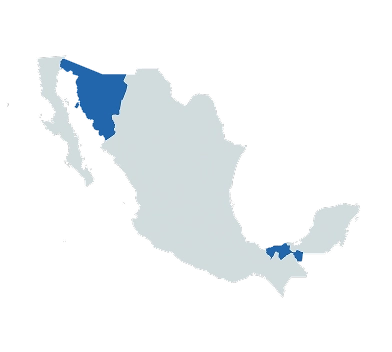
Tabasco
LEGAL STATUS
Historically restricted, but currently accessible via court action.
LEGAL PATHWAY
Amparo or direct court challenge.
RECOMENDATION
Possible for international IPs, but pursuing this route with strong legal support is essential.
What is the Amparo process?
An Amparo is a constitutional rights proceeding available in Mexican courts. In the surrogacy context, it is used to secure intended parents’ legal recognition as parents — either before or after birth — when state-level statutes do not provide a direct path. In February 2026, the SCJN confirmed that in states like Mexico City, a simpler non-contentious pathway called jurisdicción voluntaria can also be used when all parties agree and a notarized surrogacy agreement is in place.
How Much Does Surrogacy in Mexico Cost?
Cost Breakdown for Mexico Surrogacy Programs
IVMED Family Agency’s affordable surrogacy programs in Mexico start from $68,900 USD. The exact cost depends on whether IVF is included, the number of embryo transfer attempts, egg donor requirements, and the local legal pathway used in the selected state.
Here is an example of cost breakdown for a Mexico Surrogacy Live Birth Guarantee Program:
| Program stage | Payments |
|---|---|
| After signing the contract | $14,500 |
| Before IVF start | $35,000 |
| Heart beating confirmation | $18,600 |
| 22 weeks of pregnancy | $10,000 |
| Delivery time | $22,000 |
| After childbirth | $3,000 (to SM) |
| TOTAL per each contract | $103,100 |
🛈 The cost of the program may vary depending on the MXN / USD exchange rate at the time of payment.
PRICE MAY VARY DEPENDING ON THE CHOSEN SERVICES. CONTACT THE MANAGER FOR DETAILS
Mexico vs USA: Cost Comparison
Mexico has become a top destination for intended parents due to its affordability. Mexico surrogacy programs cost approximately 40–70% less than equivalent programs in the United States, while offering comparable legal services and security for international intended parents with a genetic connection to the child.
| Destination | Average Cost | LGBTQ+ Accessible | Genetic Link Required | Typical Timeline |
|---|---|---|---|---|
| Mexico | ~ $69,000 - $104,000 | Yes | Recommended | 12–22 months |
| USA | ~ $130,000 - $200,000 | Yes (some states) | No (varies) | 18–24 months |
| Destination | Mexico | USA |
|---|---|---|
| ~ $69,000 - $104,000 | ~ $130,000 - $200,000+ | |
| Yes | Yes (some states) | |
| Recommended | No (varies) | |
| 12–22 months | 18–24 months |
What to Know About Safety and Travel in Mexico

IVMED’s surrogacy in Mexico programs are conducted through a partner fertility clinic operating in established medical zones. Mexico City is one of Latin America’s largest medical tourism hubs, with internationally accredited hospitals, experienced reproductive endocrinologists, and a well-developed legal landscape for international surrogacy cases. Mexico offers excellent medical care during the surrogate care process.
Intended parents typically travel to Mexico at two key points: for the embryo transfer (or for IVF if performed locally) and for the birth. Total in-country wait time and your stay in Mexico varies but is generally 4-6 weeks over the course of the surrogacy journey. IVMED’s coordination team handles accommodation recommendations, airport support, and accompaniment to medical and local law appointments.
For current travel advisories, refer to your government’s official travel information website. IVMED provides country-specific guidance during the consultation process.
Legal Recognition in Your Home Country
Having the baby’s birth certificate issued in Mexico is the first step. The second – and equally important – step is obtaining the child’s travel documents, such as a passport, and ensuring established legal parenthood is recognized in your home country. Requirements vary significantly by country. Children born in Mexico are eligible for Mexican citizenship.
Note on double donation: If neither legal parent has a genetic link to the child, most embassies will not issue citizenship documents based on the birth certificate alone. This situation must be identified and discussed before the surrogacy arrangement starts, as you may need legal advice.
| Country | Recognition Process | Genetic Link Required |
|---|---|---|
 USA USA |
CRBA (Consular Report of Birth Abroad) + passport; DNA test typically required | Generally Yes (Exceptions possible)* |
 Canada Canada |
Birth registration with Canadian consulate; DNA test common | Yes |
 UK UK |
UK does not automatically recognize foreign surrogacy; parental order needed post-return | Yes |
 Germany Germany |
German embassy does not recognize surrogacy as parentage basis; court proceeding required | Generally Yes (Exceptions possible)* |
 France France |
Complex; French law does not recognize the surrogacy contract; transcription into French civil registry varies | Generally Yes (Exceptions possible)* |
 Australia Australia |
Recognition varies by state; some require adoption or parenting order | Yes |
 Spain Spain |
Spanish authorities have accepted Mexican birth certificates in certain cases; legal confirmation recommended | Generally Yes (Exceptions possible)* |
USACanadaUKGermanyFranceAustraliaSpain🛈 Note on Genetic Links: While many countries typically require a genetic link to establish parentage, our experienced legal team has successfully managed numerous cases where intended parents do not have a genetic connection to the child. We navigate these complex legal pathways on a case-by-case basis.
Frequently Asked Questions About Surrogacy in Mexico
Is surrogacy in Mexico legal for foreign intended parents?
Yes. Following the 2021 SCJN ruling, surrogacy legal frameworks allow foreign nationals to pursue surrogacy mexico regardless of nationality, sexual orientation, or marital status. In practice, the legal matters vary by state. Programs in Mexico City and Sinaloa offer the clearest pathways for foreign intended parents
Can same-sex couples and single parents use surrogacy in Mexico?
Yes. Following the 2021 SCJN ruling, surrogacy legal frameworks allow foreign nationals to pursue surrogacy mexico regardless of nationality, sexual orientation, or marital status. In practice, the legal matters vary by state. Programs in Mexico City and Sinaloa offer the clearest pathways for foreign intended parents
What is the Amparo process and when does it apply?
The Amparo is a constitutional rights proceeding in Mexican courts. In the mexico surrogacy context, it is used when local state laws do not provide a direct legal pathway for foreign or LGBTQ+ intended parents. An Amparo can be filed prior to the birth or after the child is born, and when successful, results in a court order recognizing the intended parents as the child’s legal parents. In Mexico City, the similar jurisdicción voluntaria process is now the standard approach for post-birth registration.
What if I don't have a genetic link to the child – can I still use a donor?
Egg donation and sperm donors are available for surrogacy mexico programs. If you need donors, we provide egg donor programs with European-quality screening. However, if neither intended parent has a genetic link to the child (double donation), most embassies will not issue citizenship documents based on the birth certificate alone, and you will need independent legal counsel in your home country.
How long does the surrogacy process take in Mexico?
The full process in Mexico – from initial consultation to returning home with the child – typically takes 12 to 22 months. This includes surrogate matching (4–12 weeks), IVF and embryo transfer, pregnancy (approximately 9 months), legal proceedings, and document processing. Programs where embryos already exist and matching is fast may be closer to the lower end of the range.
How does my child get citizenship documents after being born in Mexico?
All children born in Mexico receive Mexican citizenship and can obtain a mexican passport, which is useful if home country documents take longer to process. For your home country’s citizenship, you will need to register the birth at your country’s consulate or embassy in Mexico. Requirements typically include: the Mexican birth certificate, a surrogacy contract, DNA test (if required), and proof of your citizenship. IVMED’s team provides embassy liaison support throughout this process.
Start Your Surrogacy Journey in Mexico with IVMED
IVMED Family Agency provides legally structured, medically supported surrogacy in Mexico programs, open to all family types. Programs start from $64,900. Book a free consultation to receive a detailed assessment and cost estimate for your specific situation.